Platelet-Rich Plasma (PRP) for Chronic Wounds
Explore how platelet-rich plasma is prepared, how it is used in wound management, and what research tells us about its benefits and limitations.
Platelet-rich plasma, or PRP, is prepared from a person's own blood. Processing concentrates platelets in the plasma, the liquid part of blood. Platelets contain growth factors involved in the body's repair processes. The term *autologous* means that the blood comes from the same person receiving the preparation. [Cleveland Clinic: PRP overview]
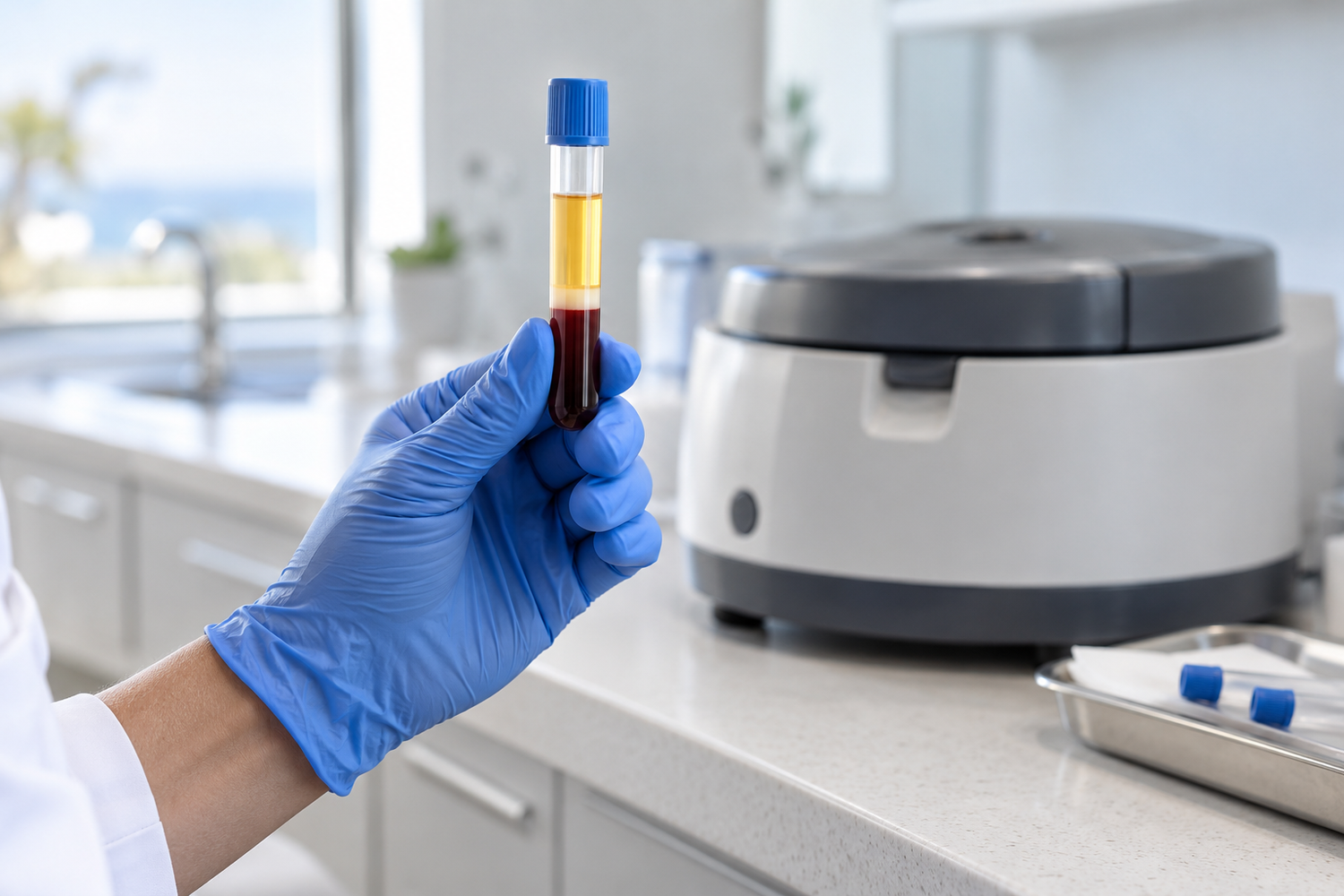
1. Collect a blood sample
A healthcare professional collects a small sample of the patient’s own blood. This is used to prepare the platelet-rich plasma, or PRP. FDA/NLM device information
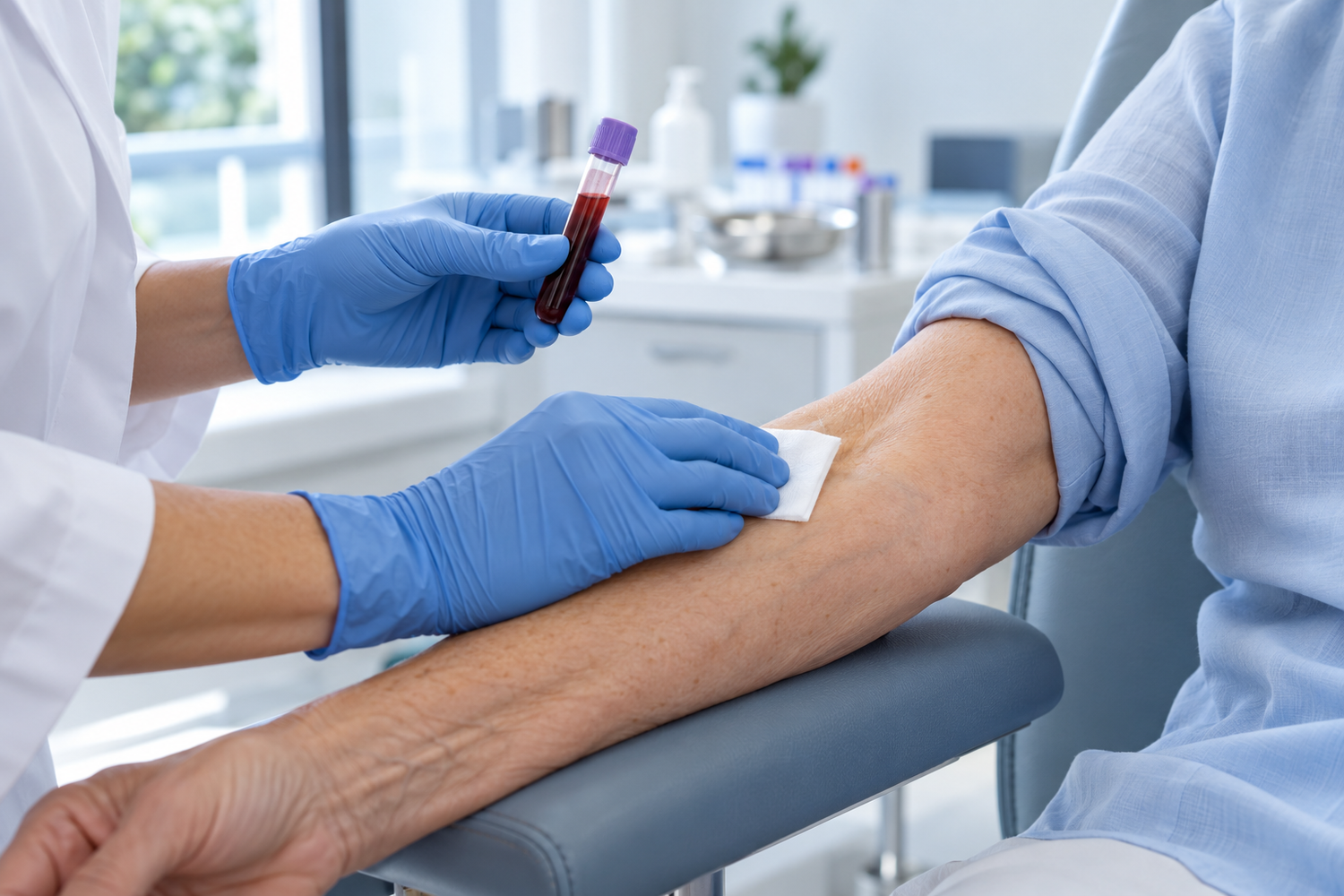
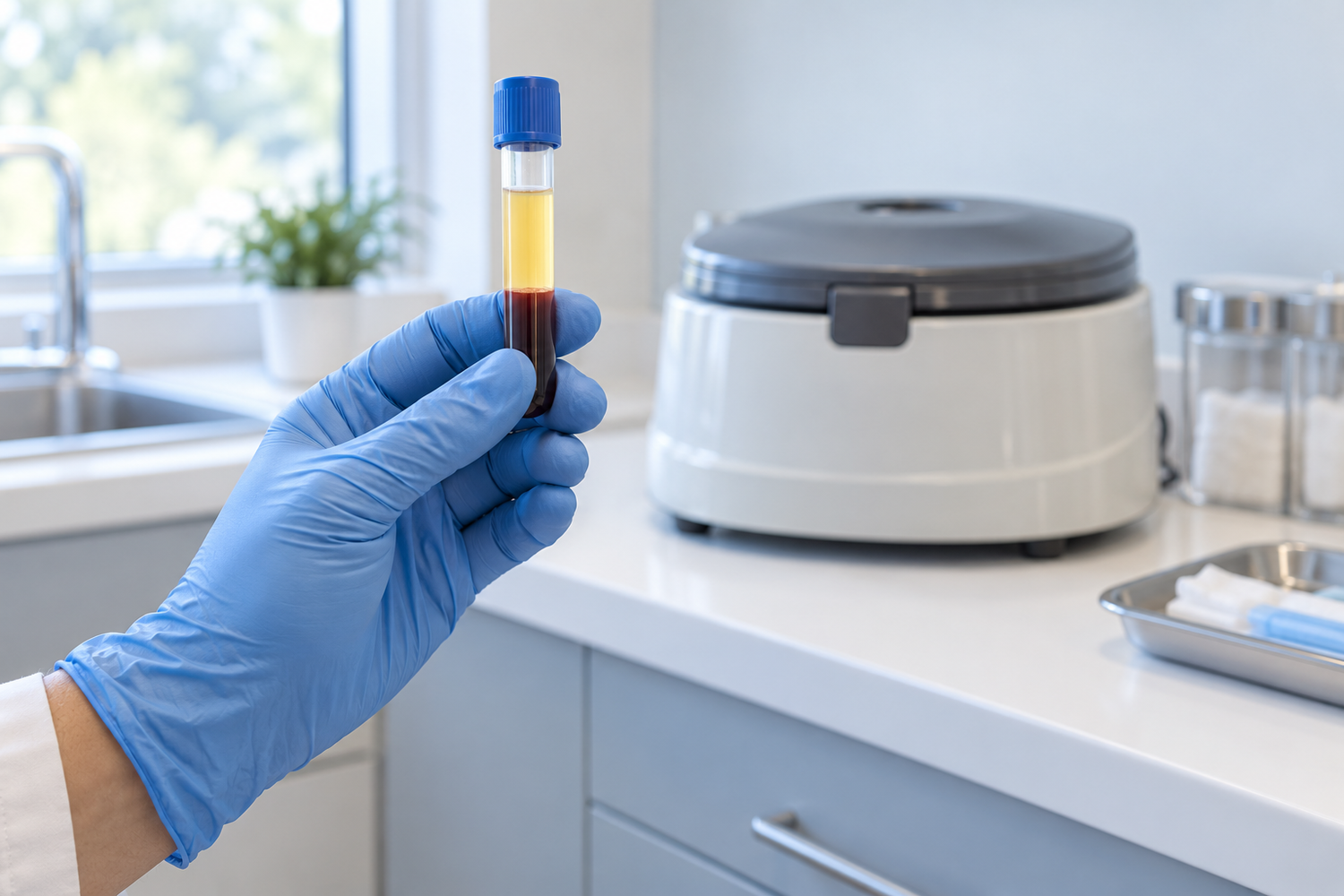
2. Prepare the PRP gel
A centrifuge spins the sample to separate its components. The platelet-rich portion is then prepared into a gel using the selected wound-care system. Preparation methods vary between systems. FDA device description
3. Apply the gel to the wound
A healthcare professional applies the prepared gel to the wound surface. This topical approach differs from PRP injections. Dressings and follow-up assessment form part of the broader wound-care plan. FDA/NLM; MedlinePlus
General educational information—not medical advice or a promise of healing. The process varies with the system and clinical care plan.
Collect a blood sample
Prepare the PRP gel
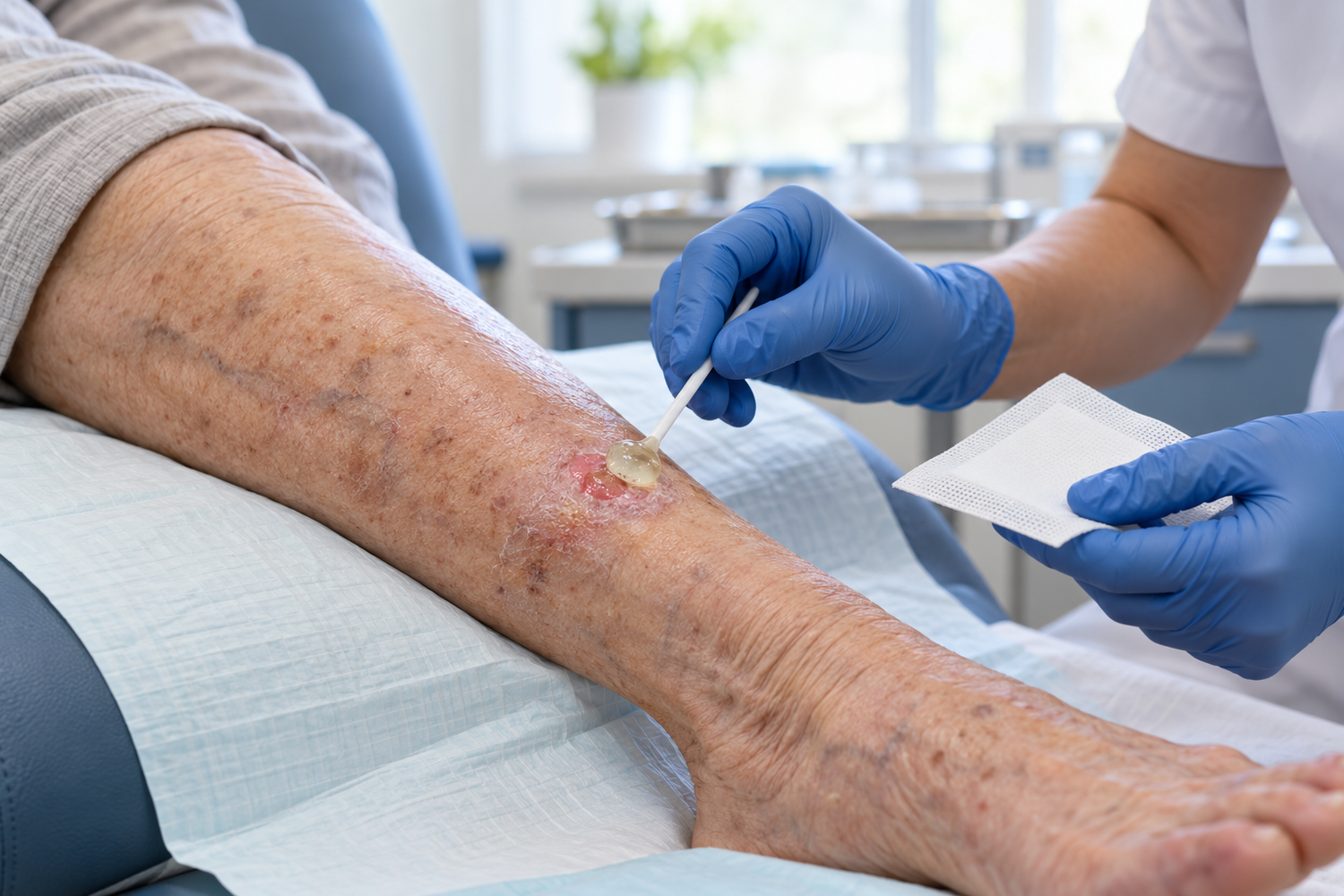
Apply the gel to the wound
How is PRP used in wound management?
Some wound-care systems process a patient’s own blood to prepare platelet-rich plasma (PRP) gel for application to the wound surface. This topical approach differs from PRP injections, and preparation methods depend on the device used. RegenKit-Wound Gel-2 is an FDA-cleared device for preparing PRP gel for wound management. FDA clearance record Its stated intended use includes topical management of exuding skin wounds—wounds that release fluid—such as leg ulcers, pressure ulcers, diabetic ulcers, and mechanically or surgically debrided wounds, under healthcare professional supervision. FDA/NLM device information and indications for use This device-specific clearance does not guarantee that an individual wound will heal.
What does the evidence show?
Research has reported promising findings, particularly for diabetes-related foot ulcers, but conclusions are not uniform.
A 2025 meta-analysis of 15 randomized trials involving 1,010 participants reported improved complete healing and shorter healing times with PRP compared with conventional care. These pooled findings do not establish the same benefit for every wound type or PRP preparation. [Xu, Huang and Tao, 2025]
Where does PRP fit within wound care?
PRP is considered an adjunct—an additional intervention—rather than a replacement for comprehensive wound management. Wound care commonly includes assessment of circulation, wound cleansing, appropriate dressings, and management of factors that delay healing. The exact approach varies with the cause and characteristics of the wound. [MedlinePlus: Wound care centers]; [IWGDF, 2023]
*Only the treating wound-care doctor can determine whether PRP is suitable for an individual patient and establish an appropriate treatment plan following a clinical assessment.
*This page provides general educational information. It does not provide medical advice, determine treatment eligibility, or promise a particular outcome.*